When it comes to baking for a crowd, nothing beats the simplicity and versatility of a sheet cake. Whether you’re planning a birthday party, a wedding reception, or a casual get-together, choosing the right size can make all the difference. Too small, and you’ll run out of slices halfway through the celebration. Too big, and you’ll be left with leftovers for days.
So how do you get it just right?
Think of it like planning seats at a dinner table—you want everyone to have a place without overcrowding. In this guide, we’ll walk through everything you need to know about sheet cake dimensions, servings, and practical tips so you can bake (or order) with confidence.
What Is a Sheet Cake?
A sheet cake is a flat, rectangular cake baked in a large pan. Unlike layered cakes, it’s typically a single layer, though it can be stacked if needed. Its simple shape makes it easy to cut, decorate, and serve.
You’ve probably seen one at a party—clean slices, uniform pieces, and plenty to go around. That’s the beauty of it: practical, efficient, and perfect for sharing.
Common Sheet Cake Sizes Explained
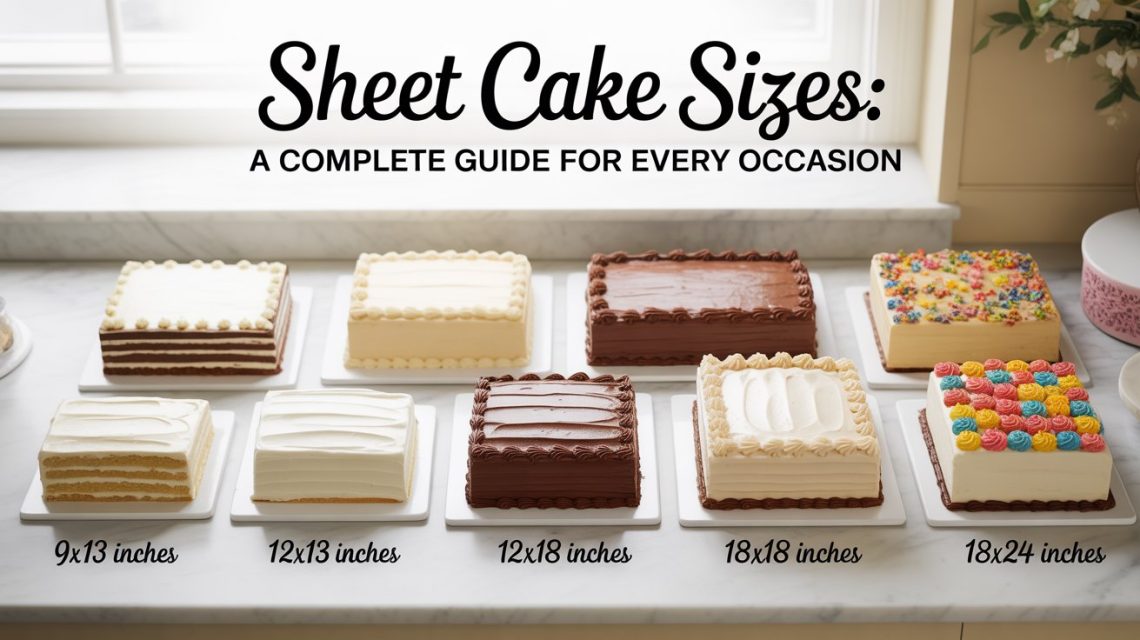
Not all sheet cakes are created equal. There are three standard sizes you’ll come across most often:
Full Sheet
- Dimensions: 18 x 24 inches
- Ideal for large gatherings
Half Sheet
- Dimensions: 12 x 18 inches
- Perfect for medium-sized events
Quarter Sheet
- Dimensions: 9 x 13 inches
- Great for small parties or family occasions
These sizes are based on commercial baking pans, but home bakers often use slightly smaller versions depending on their oven capacity.
How Many People Does Each Size Serve?
This is where things get interesting. The number of servings depends on how you slice the cake.
Standard Serving Guide
- Quarter: 20–24 people
- Half: 40–48 people
- Full: 80–96 people
Party vs Wedding Portions
- Party slices are larger (about 2 x 2 inches)
- Wedding slices are smaller (about 1 x 2 inches)
So, if you’re hosting a formal event, you can stretch the cake further. For casual gatherings, people tend to go for bigger pieces—sometimes even seconds.
Choosing the Right Size for Your Event
Picking the correct size isn’t just about numbers—it’s about the experience you want to create.
Consider Your Guest Count
Always estimate slightly higher than your guest list. People love dessert, and running out can be disappointing.
Think About Other Desserts
If you’re serving cupcakes, cookies, or ice cream, you might not need a large cake.
Event Type Matters
A wedding reception requires neat, smaller slices. A birthday party? Bigger, generous pieces are more common.
Sheet Cake Pan Dimensions and Depth
Pan size is only part of the story. Depth also plays a role.
Typical Depth
- 2 inches: Standard
- 3 inches: Taller, more filling
A deeper cake means thicker slices, which can slightly reduce the number of servings but adds a more indulgent feel.
Cutting a Sheet Cake the Right Way
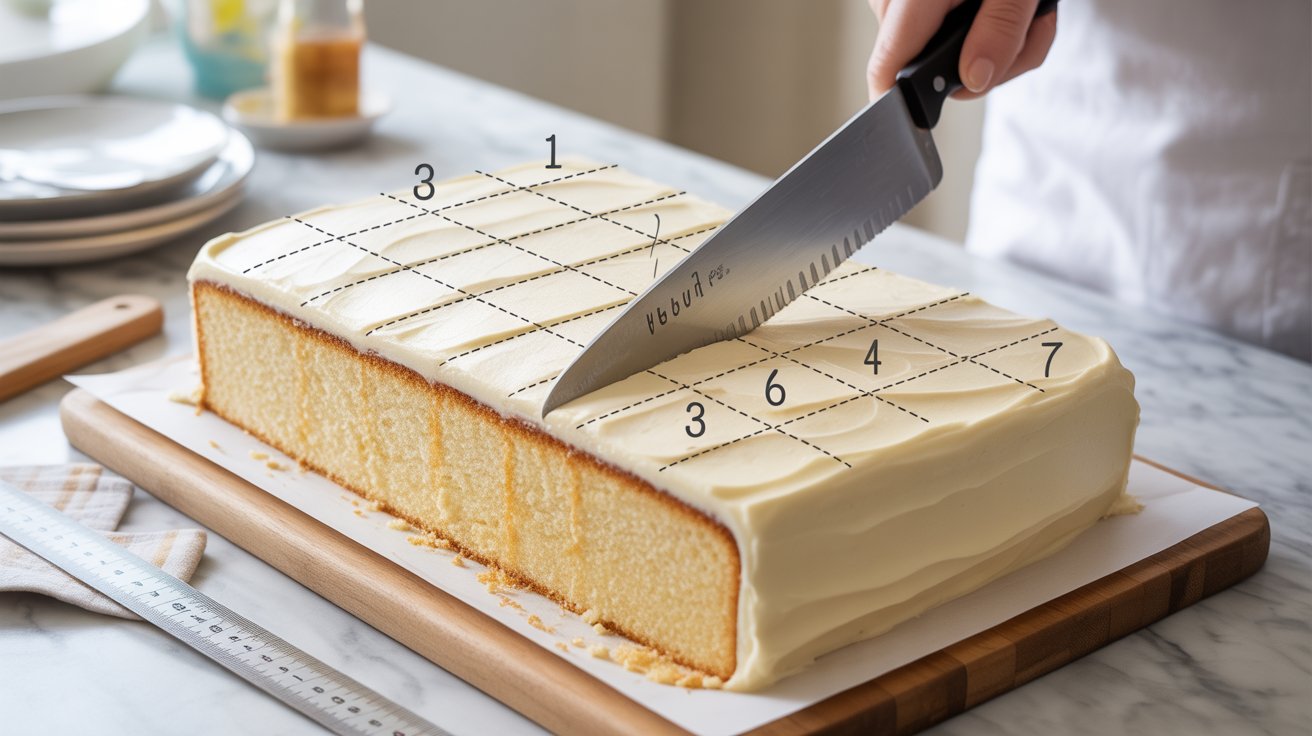
You might think slicing is straightforward—but technique matters.
Uniform Cuts
Use a ruler or mark guidelines before cutting. This helps keep portions consistent.
Grid Method
Cut rows and columns like a grid. It’s the easiest way to ensure even servings.
Clean Slices
Wipe the knife between cuts for neat edges, especially if the cake has frosting.
Home Baking vs Bakery Sizes
Here’s something many people don’t realize: home-baked cakes often differ slightly from bakery ones.
Home Ovens
Most ovens can only fit quarter sheet pans comfortably.
Bakery Equipment
Professional kitchens use larger ovens that can handle full sheet pans with ease.
So if you’re baking at home for a big event, you might need to bake multiple smaller cakes instead of one large one.
Popular Uses for Each Cake Size
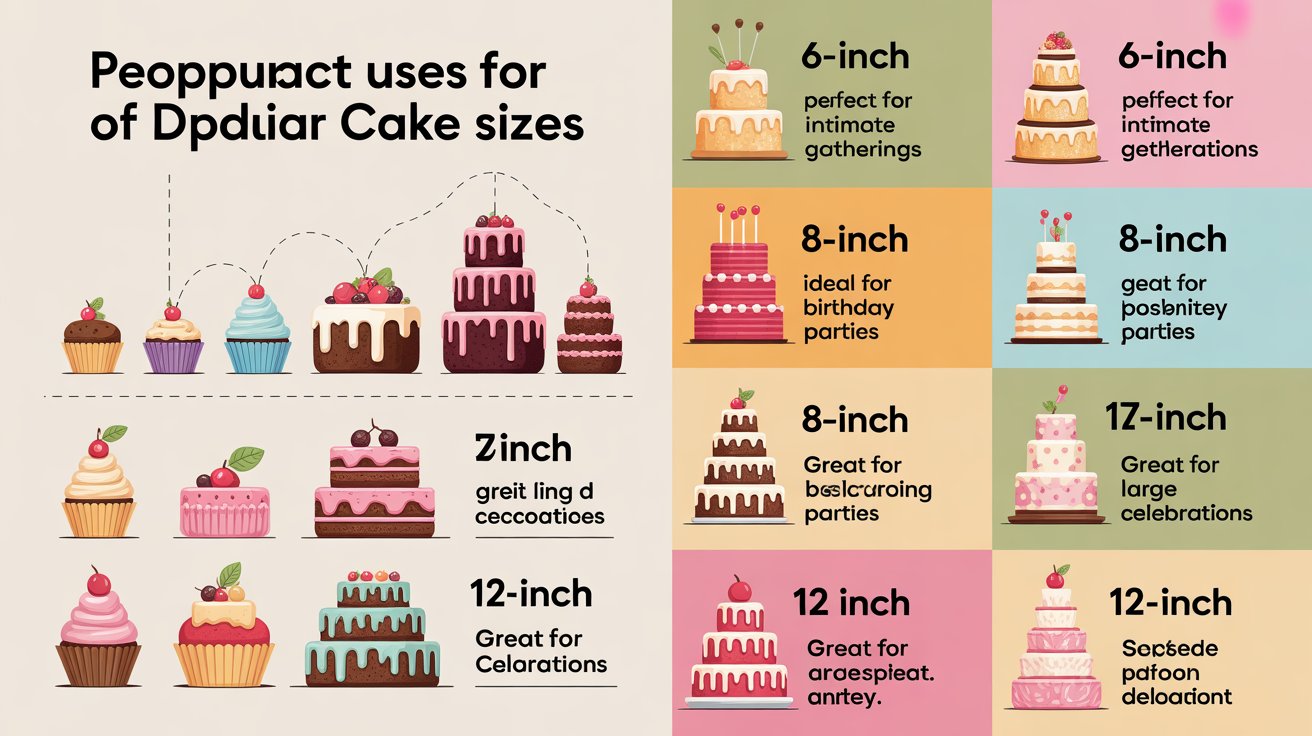
Each size has its own sweet spot.
Quarter Sheet
- Birthdays
- Small gatherings
- Family dinners
Half Sheet
- Office parties
- School events
- Anniversaries
Full Sheet
- Weddings
- Large celebrations
- Community events
Think of it like clothing sizes—you wouldn’t wear a winter coat in summer, right? The same logic applies here.
Decorating Ideas Based on Size
The larger the cake, the more creative you can get.
Small Cakes
Simple designs work best—minimal text, clean frosting, and a few decorations.
Medium Cakes
You have room for themed designs, messages, and patterns.
Large Cakes
These are like blank canvases. You can include detailed artwork, multiple colors, and even edible images.
Budget Considerations
Cost is often tied directly to size—but not always.
Factors That Affect Price
- Ingredients
- Design complexity
- Bakery vs homemade
- Flavor choices
A simple large cake might cost less than a smaller one with intricate decorations. So it’s not just about size—it’s about detail.
Storage and Transport Tips
A big cake is great—until you have to move it.
Transporting
Use a sturdy base and keep the cake level. Avoid sudden stops while driving.
Refrigeration
Most cakes stay fresh for 2–3 days when stored properly.
Freezing
Yes, you can freeze leftover slices. Wrap them tightly to maintain moisture.
Common Mistakes to Avoid
Even experienced bakers can slip up. Here are a few pitfalls to watch for:
Underestimating Servings
Always plan for a few extra portions.
Wrong Pan Size
Using the wrong pan can affect baking time and texture.
Overcomplicating Design
Sometimes, simple looks better—and tastes just as good.
Customizing Your Cake for Special Events
Customization can turn a simple dessert into a memorable centerpiece.
Flavor Choices
Chocolate, vanilla, red velvet, or something unique—choose what your guests will enjoy.
Filling Options
Cream, fruit, or ganache can elevate the experience.
Theme Matching
Match the cake design to your event’s theme for a cohesive look.
FAQs
1. How do I know which cake size is best for my event?
Start with your guest count and consider portion sizes. If you’re unsure, go slightly bigger to avoid running out.
2. Can I stack sheet cakes to make them taller?
Yes, you can layer them with fillings in between, but make sure they’re supported properly to prevent collapsing.
3. What’s the difference between a sheet cake and a regular cake?
A sheet cake is typically a single-layer rectangular cake, while regular cakes are often round and layered.
4. How far in advance can I bake a sheet cake?
You can bake it 1–2 days ahead and store it properly. For longer storage, freezing is a good option.
5. Do sheet cakes taste different from layered cakes?
Not really—the flavor depends on the recipe. The main difference is in presentation and structure.
Conclusion
Choosing the right sheet cake size isn’t just about numbers—it’s about creating a smooth, enjoyable experience for your guests. From understanding dimensions to estimating servings and planning decorations, every detail plays a role.
Think of your cake as the final note in a song—it should leave people satisfied and smiling. Whether you’re baking at home or ordering from a bakery, a little planning goes a long way.
With the right size and a bit of creativity, your cake can be more than just dessert—it can be the highlight of the celebration.